


Protein Storage: From -80°C to Lyophilized Powder
 source:ELK Biotechnology
 date:2026-07-22
 views:488
From -80°C to Lyophilized Powder: Fundamental Principles and Practical Solutions for Long-term Protein Storage in the Biotech Industry
In the biopharmaceutical and diagnostic sectors, proteins serve as the core functional components. These include monoclonal antibodies, recombinant cytokines, enzyme-labeled antigens, accessory proteins for mRNA vaccines and more. The bioactivity of each protein sample directly determines drug efficacy, detection sensitivity and batch consistency. Protein storage in the biotech industry is far more than simply placing samples in refrigerators; it is a systematic project spanning molecular conformation research to industrial scale-up.
This article elaborates on the underlying mechanisms of protein inactivation, explains the core principles of protein storage ranging from -80°C ultra-low temperature preservation to lyophilization, and delivers ready-to-use quality control protocols.
I. Three Major Causes of Protein Inactivation
Protein inactivation mainly arises from three types of mechanisms:
-
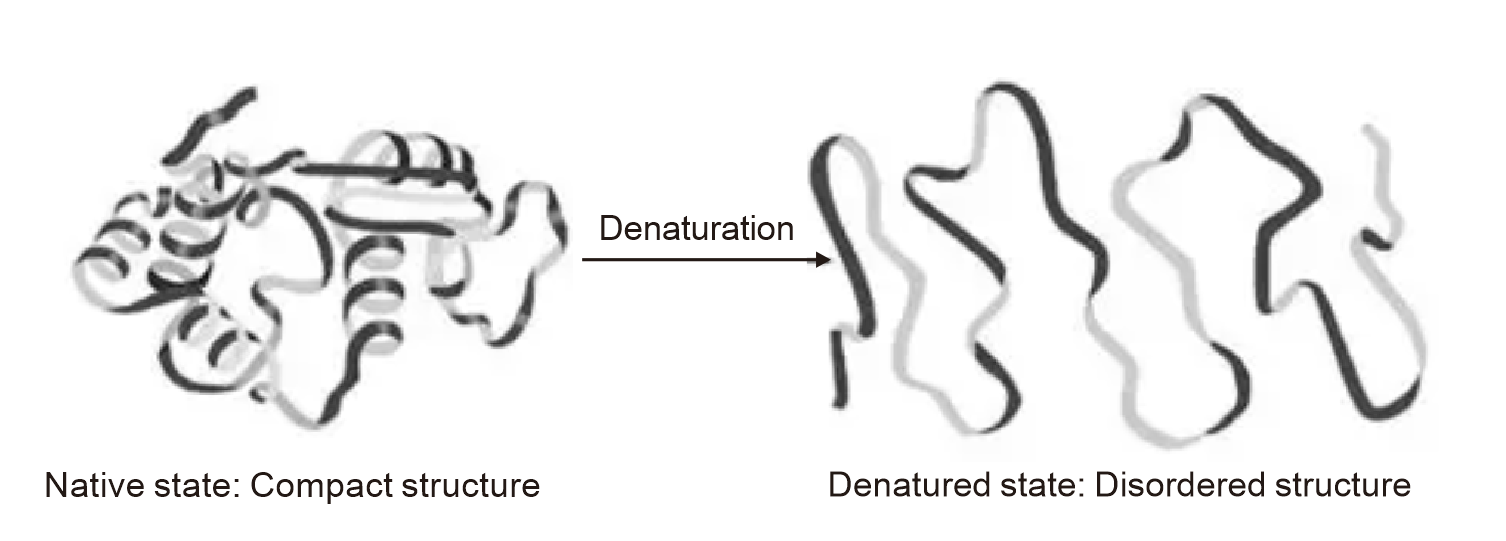
Physical Denaturation Factors such as temperature, pH value and shear force disrupt hydrogen bonds and hydrophobic interactions, causing proteins to unfold from their native folded state. Denatured proteins expose hydrophobic cores and tend to form irreversible aggregates via hydrophobic interactions.
-
Chemical Degradation Covalent structures are damaged through multiple reactions: deamidation of asparagine and glutamine side chains, oxidation of methionine and cysteine residues, disulfide bond rearrangement, and peptide bond hydrolysis.
-
Interfacial Adsorption and Surface Denaturation Proteins undergo conformational unfolding at gas-liquid interfaces (e.g., ice crystal surfaces during lyophilization) or solid-liquid interfaces (e.g., inner walls of storage tubes), followed by aggregation. This is the primary cause of activity loss during lyophilization.
II. Core Principles of Four Major Storage Strategies
The essence of protein storage is to inhibit all inactivation pathways and maintain the native conformation and chemical integrity of proteins during storage.
1. Low Temperature: A Thermodynamic Retarder
Chemical reaction rates decrease by 2 to 3 times for every 10°C drop in temperature. Nevertheless, low temperature is not a panacea.
- 4°C: Suitable for short-term storage (1–4 weeks). Watch out for microbial contamination and residual proteases.
- -20°C: The optimal temperature for long-term storage. Ice crystal formation leads to solute concentration and pH shift; the pH of phosphate buffer may drop by up to 2 units at -20°C.
- -80°C: Below the glass transition temperature (Tg'), ice crystals grow extremely slowly, ideal for highly unstable proteins such as kinases and transcription factors.
Key Notes
- Avoid repeated freeze-thaw cycles. Aliquot samples into single-use volumes (≤ 500 μL per tube).
- Add cryoprotectants: Glycerol (10–50% v/v) or sucrose (5–10% w/v) to mitigate ice crystal damage.
- Rapid freezing is superior to slow freezing. Flash freezing with liquid nitrogen (-196°C) generates fine ice crystals and reduces protein exposure to ice-liquid interfaces.
2. pH and Buffer System: Anchor Points for Protein Conformation
Proteins generally exhibit the poorest stability near their isoelectric point (pI), where zero net charge maximizes intermolecular hydrophobic attraction. Accordingly, the pH of storage buffers should stay away from the pI, typically maintained at 7.0–8.0.
Common Misconceptions
- Phosphate buffer is prone to crystallization at low temperatures and accelerates oxidation in the presence of metal ions.
- The pKa of Tris-HCl changes significantly with temperature (a shift of -0.028 per °C), leading to a pH increase of 0.3–0.5 at 4°C.
Recommended Formulations
- General use: 20 mM HEPES (pH 7.4) + 150 mM NaCl, applicable to most antibodies and enzymes.
- Special proteins: Histones require a low pH (5.0–6.0) to prevent aggregation; membrane proteins need detergents (e.g., 0.1% DDM) to sustain the hydrophobic environment.
3. Stabilizers: Synergistic Molecular Protectors
Stabilizers enhance protein conformational stability via preferential hydration or direct molecular binding. Combined formulations have become a major trend in 2026.
表格
| Stabilizer Category | Typical Agents | Concentration Range | Mechanism | Application Scenarios |
|---|---|---|---|---|
| Sugars | Trehalose, Sucrose | 5–10% w/v | Preferential hydration; increases solution surface tension | Lyophilization & liquid storage |
| Polyols | Glycerol, Sorbitol | 10–50% v/v | Reduces water activity; inhibits ice crystal formation | Frozen storage |
| Amino Acids | Arginine, Proline | 0.1–0.5 M | Suppresses aggregation, especially at hydrophobic interfaces | High-concentration antibodies & membrane proteins |
| Surfactants | Tween-80, Poloxamer 188 | 0.01–0.1% | Competitively occupies gas-liquid and solid-liquid interfaces | Lyophilization & stirring processes |
| Cyclodextrins | 2-Hydroxypropyl-β-cyclodextrin | 1–5% w/v | Encapsulates hydrophobic domains to prevent aggregation | Emerging solution since 2025 |
Formulation Example for Long-term Storage of Monoclonal Antibodies 20 mM HEPES (pH 7.2), 150 mM NaCl, 5% sucrose, 0.01% Tween-80, 1 mM EDTA (metal ion chelator), 0.02% NaN₃ (bacteriostatic agent).
4. Inhibition of Chemical Degradation: Antioxidation and Anti-proteolysis
- Reducing agents: 1–5 mM DTT or 0.5–2 mM TCEP prevents cysteine oxidation. Note: DTT is prone to oxidation and must be freshly prepared; TCEP is odorless but may interfere with the activity of certain enzymes.
- Metal chelators: 1–5 mM EDTA or more stable DTPA inhibits metal-catalyzed oxidation.
- Protease inhibitors: Trace proteases may remain even in purified proteins. Broad-spectrum inhibitor cocktails (e.g., PMSF + Leupeptin + Aprotinin) are recommended.
III. Detailed Introduction to Mainstream Storage Methods: From -80°C to Lyophilized Powder
1. Ultra-low Temperature Liquid Storage (-80°C)
Application: Highly unstable proteins and intermediate products for frequent access.
Operation: Maintain protein concentration above 1 mg/mL (low concentration causes severe surface adsorption). Add 10% glycerol or 5% sucrose as cryoprotectant. Use low-binding centrifuge tubes (e.g., Eppendorf LoBind). Aliquot samples, flash-freeze in liquid nitrogen, then transfer to -80°C freezers.

Limitations: Occupies freezer space, incurs high transportation costs, and faces risks posed by power outages.
2. Lyophilization (Freeze-drying)
Principle: Freeze protein solutions at low temperature and remove moisture via sublimation to obtain loose dry powder. Lyophilized products can be stored long-term at 2–8°C or room temperature with minimal activity loss after reconstitution.
Key Parameters
- Pre-freezing rate: Slow freezing (-1°C/min) forms large ice crystals and damages proteins. Flash freezing with liquid nitrogen produces fine ice crystals, combined with high-concentration protectants such as 10% trehalose for optimal results.
- Primary drying: Temperature should be kept below the collapse temperature (Tc), generally -20°C to -40°C, with pressure controlled at 10–100 Pa.
- Secondary drying: Raise the temperature to 20–30°C to reduce residual moisture to 1–3%. Excessively low moisture (<0.5%) may destroy the protein hydration layer and trigger aggregation after reconstitution.
2026 New Technology: Process Analytical Technology (PAT) lyophilizers adopt near-infrared spectroscopy to monitor residual moisture in real time for precise endpoint control, limiting batch-to-batch variation to ±0.2%.
Practical Formulation for Recombinant Cytokine Lyophilization: 10 mM phosphate buffer (pH 7.4), 5% trehalose, 1% mannitol (bulking agent), 0.1% BSA (carrier protein to avoid adsorption).
3. Ammonium Sulfate Precipitation
Application: Intermediate products or proteins requiring concentration.
Operation: Slowly add saturated ammonium sulfate to reach 40–80% saturation. Proteins precipitate via salting out and can be stored at 4°C for several months. Desalting by dialysis is required before use.
Note: Ammonium sulfate may alter protein conformation and is not suitable for salt-sensitive functional proteins.
4. Concentrated Liquid Storage (4°C)
Application: Stable proteins for short-term use, such as enzyme-labeled antibodies for diagnostic reagents.
Operation: Add 0.02% NaN₃ or 0.01% thimerosal (use with caution due to toxicity). Store samples in low-binding tubes. Avoid frequent opening to prevent contamination and test bioactivity every two weeks regularly.
IV. Quality Control and Regulatory Requirements for Industrial Applications
For biopharmaceutical enterprises, protein storage must comply with ICH Q5C stability guidelines and FDA regulations. Core quality control indicators are listed below:
| Test Item | Detection Method | Acceptance Criteria |
|---|---|---|
| Purity | SDS-PAGE, SEC-HPLC | Main peak ≥ 95%; Aggregates ≤ 5% |
| Bioactivity | Cell-based / Enzymatic assay | Specific activity ≥ 80% of the initial value |
| Conformational Stability | Differential Scanning Fluorimetry (DSF) | Tm value decrease ≤ 2°C |
| Particulate Matter | Dynamic Light Scattering (DLS) | Particle size < 100 nm; No subvisible particles |
| Moisture Content (Lyophilized Products) | Karl Fischer Titration | 1–3% |
Regulatory Trend: The new EMA guidelines issued in 2026 require lyophilized products to be used within 30 minutes after reconstitution, with supporting data on post-reconstitution stability. Storage solutions must therefore take in-use stability into account.
V. Practical Troubleshooting & Common Pitfalls
Misconception 1: Higher protein concentration means better stability
Incorrect. A higher concentration increases intermolecular collision frequency and aggregation risks. The optimal concentration varies by protein, generally ranging from 1 mg/mL to 10 mg/mL. Add 0.1–0.5 M arginine for aggregation-prone proteins.
Misconception 2: All proteins are suitable for lyophilization
Incorrect. Dehydration-sensitive proteins (e.g., certain transcription factors and membrane proteins) may lose over 50% activity after lyophilization. Conduct small-scale trials first and evaluate conformational changes via CD spectroscopy or DSC.
Misconception 3: The more lyoprotectants added, the better
Incorrect. Excess sugar (>15%) leads to an excessively high glass transition temperature and incomplete drying. Overdosage of bulking agents such as mannitol may cause crystallization and damage the lyophilized cake structure.
Advanced Technique: Application of Smart Stabilizers
Since 2025, 2-hydroxypropyl-β-cyclodextrin and chaperone-mimetic peptides (e.g., PEGylated chaperones) have been widely applied. Cyclodextrins encapsulate hydrophobic domains on protein surfaces, while chaperone mimetics lock protein conformations. Both work exceptionally well for bispecific antibodies and fusion proteins.
From -80°C ultra-low temperature freezers to sublimation drying in lyophilizers, every step relies on in-depth understanding of molecular mechanisms and robust engineering capabilities. With the popularization of PAT lyophilizers, AI-based protein aggregation prediction and high-throughput stability screening via microfluidics, optimal storage conditions can be determined more efficiently. Nevertheless, the core principles — low temperature, appropriate pH, stabilizer supplementation and degradation inhibition — remain fundamental.
This article aims to provide clear guidance for protein storage workflows, helping preserve the bioactivity of every valuable protein sample for long-term use.

 RETURN