
$148.00/50µL $248.00/100µL
| 50 µL | $148.00 |
| 100 µL | $248.00 |
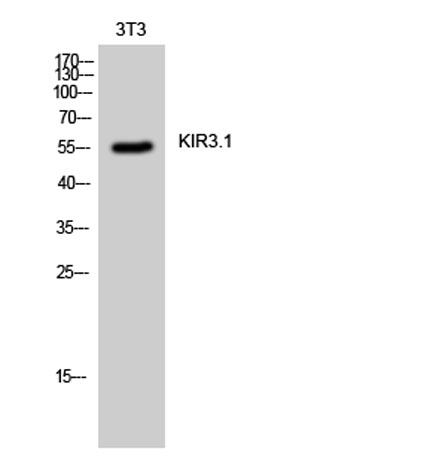
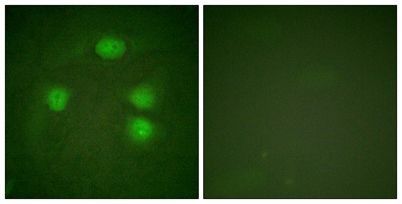
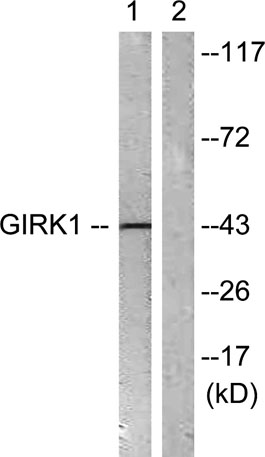
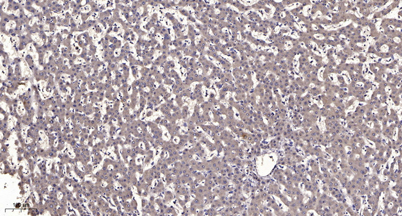
| Product name: | KIR3.1 rabbit pAb |
| Reactivity: | Human;Mouse;Rat |
| Alternative Names: | KCNJ3; GIRK1; G protein-activated inward rectifier potassium channel 1; GIRK-1; Inward rectifier K(+) channel Kir3.1; Potassium channel; inwardly rectifying subfamily J member 3 |
| Source: | Rabbit |
| Dilutions: | WB 1:500-2000;IHC-p 1:50-300 |
| Immunogen: | The antiserum was produced against synthesized peptide derived from human GIRK1/KIR3.1/KCNJ3. AA range:151-200 |
| Storage: | -20°C/1 year |
| Clonality: | Polyclonal |
| Isotype: | IgG |
| Concentration: | 1 mg/ml |
| Observed Band: | 56kD |
| GeneID: | 3760 |
| Human Swiss-Prot No: | P48549 |
| Cellular localization: | Membrane; Multi-pass membrane protein. |
| Background: | Potassium channels are present in most mammalian cells, where they participate in a wide range of physiologic responses. The protein encoded by this gene is an integral membrane protein and inward-rectifier type potassium channel. The encoded protein, which has a greater tendency to allow potassium to flow into a cell rather than out of a cell, is controlled by G-proteins and plays an important role in regulating heartbeat. It associates with three other G-protein-activated potassium channels to form a heteromultimeric pore-forming complex that also couples to neurotransmitter receptors in the brain and whereby channel activation can inhibit action potential firing by hyperpolarizing the plasma membrane. These multimeric G-protein-gated inwardly-rectifying potassium (GIRK) channels may play a role in the pathophysiology of epilepsy, addiction, Down's syndrome, at |


