
$148.00/50µL $248.00/100µL
| 50 µL | $148.00 |
| 100 µL | $248.00 |
| Product name: | NMDAε3 rabbit pAb |
| Reactivity: | Human;Rat;Mouse; |
| Alternative Names: | GRIN2C; NMDAR2C; Glutamate [NMDA] receptor subunit epsilon-3; N-methyl D-aspartate receptor subtype 2C; NMDAR2C; NR2C |
| Source: | Rabbit |
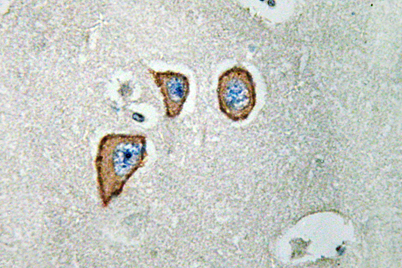
| Dilutions: | Immunohistochemistry: 1/100 - 1/300. ELISA: 1/5000. Not yet tested in other applications. |
| Immunogen: | The antiserum was produced against synthesized peptide derived from human NMDAepsilon3. AA range:937-986 |
| Storage: | -20°C/1 year |
| Clonality: | Polyclonal |
| Isotype: | IgG |
| Concentration: | 1 mg/ml |
| Molecular Weight: | 134kD |
| GeneID: | 2905 |
| Human Swiss-Prot No: | Q14957 |
| Cellular localization: | Cell membrane ; Multi-pass membrane protein . Cell junction, synapse, postsynaptic cell membrane; Multi-pass membrane protein. |
| Background: | This gene encodes a subunit of the N-methyl-D-aspartate (NMDA) receptor, which is a subtype of ionotropic glutamate receptor. NMDA receptors are found in the central nervous system, are permeable to cations and have an important role in physiological processes such as learning, memory, and synaptic development. The receptor is a tetramer of different subunits (typically heterodimer of subunit 1 with one or more of subunits 2A-D), forming a channel that is permeable to calcium, potassium, and sodium, and whose properties are determined by subunit composition. Alterations in the subunit composition of the receptor are associated with pathophysiological conditions such as Parkinson's disease, Alzheimer's disease, depression, and schizophrenia. Alternative splicing results in multiple transcript variants. [provided by RefSeq, Jun 2013], |