$148.00/50µL $248.00/100µL
| 50 µL | $148.00 |
| 100 µL | $248.00 |
| Product name: | ALK (phospho Tyr1096) rabbit pAb |

| Reactivity: | Human;Mouse |
| Alternative Names: | ALK; ALK tyrosine kinase receptor; Anaplastic lymphoma kinase; CD antigen CD246 |
| Source: | Rabbit |
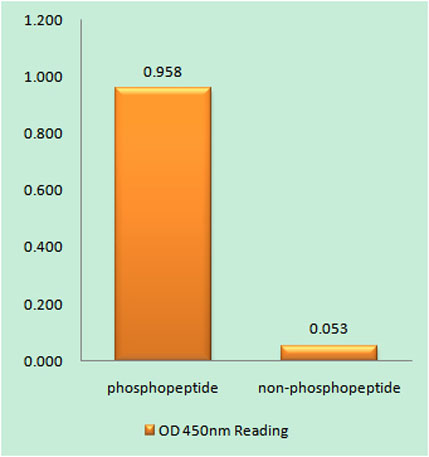
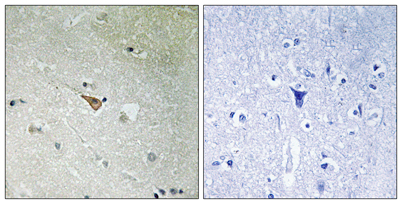
| Dilutions: | Immunohistochemistry: 1/100 - 1/300. ELISA: 1/20000. Not yet tested in other applications. |
| Immunogen: | The antiserum was produced against synthesized peptide derived from human ALK around the phosphorylation site of Tyr1096. AA range:1062-1111 |
| Storage: | -20°C/1 year |
| Clonality: | Polyclonal |
| Isotype: | IgG |
| Concentration: | 1 mg/ml |
| Observed Band: | 150-240kD |
| Molecular Weight: | 176kD |
| GeneID: | 238 |
| Human Swiss-Prot No: | Q9UM73 |
| Cellular localization: | Cell membrane ; Single-pass type I membrane protein . Membrane attachment is essential for promotion of neuron-like differentiation and cell proliferation arrest through specific activation of the MAP kinase pathway. . |
| Background: | This gene encodes a receptor tyrosine kinase, which belongs to the insulin receptor superfamily. This protein comprises an extracellular domain, an hydrophobic stretch corresponding to a single pass transmembrane region, and an intracellular kinase domain. It plays an important role in the development of the brain and exerts its effects on specific neurons in the nervous system. This gene has been found to be rearranged, mutated, or amplified in a series of tumours including anaplastic large cell lymphomas, neuroblastoma, and non-small cell lung cancer. The chromosomal rearrangements are the most common genetic alterations in this gene, which result in creation of multiple fusion genes in tumourigenesis, including ALK (chromosome 2)/EML4 (chromosome 2), ALK/RANBP2 (chromosome 2), ALK/ATIC (chromosome 2), ALK/TFG (chromosome 3), ALK/NPM1 (chromosome 5), ALK/SQSTM1 (chromosome |

