
$148.00/50µL $248.00/100µL
| 50 µL | $148.00 |
| 100 µL | $248.00 |
| Product name: | CD314 rabbit pAb |
| Reactivity: | Human;Rat;Mouse; |
| Alternative Names: | KLRK1; D12S2489E; NKG2D; NKG2-D type II integral membrane protein; Killer cell lectin-like receptor subfamily K member 1; NK cell receptor D; NKG2-D-activating NK receptor; CD antigen CD314 |
| Source: | Rabbit |
| Dilutions: | Western Blot: 1/500 - 1/2000. ELISA: 1/10000. Not yet tested in other applications. |
| Immunogen: | The antiserum was produced against synthesized peptide derived from human KLRK1. AA range:111-160 |
| Storage: | -20°C/1 year |
| Clonality: | Polyclonal |
| Isotype: | IgG |
| Concentration: | 1 mg/ml |
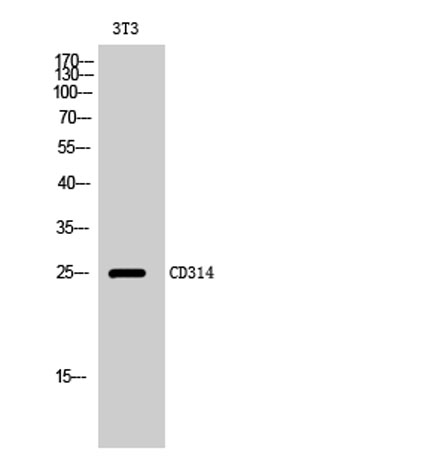
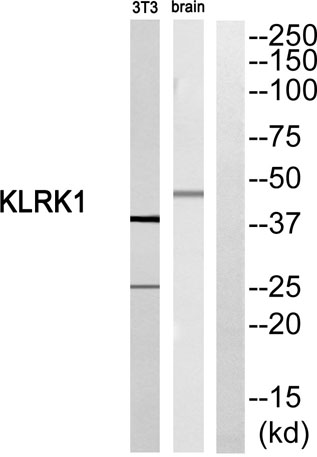
| Observed Band: | 25kD |
| GeneID: | 22914 |
| Human Swiss-Prot No: | P26718 |
| Cellular localization: | Cell membrane ; Single-pass type II membrane protein . Colocalized with HCST on the cell surface. |
| Background: | Natural killer (NK) cells are lymphocytes that can mediate lysis of certain tumor cells and virus-infected cells without previous activation. They can also regulate specific humoral and cell-mediated immunity. NK cells preferentially express several calcium-dependent (C-type) lectins, which have been implicated in the regulation of NK cell function. The NKG2 gene family is located within the NK complex, a region that contains several C-type lectin genes preferentially expressed in NK cells. This gene encodes a member of the NKG2 family. The encoded transmembrane protein is characterized by a type II membrane orientation (has an extracellular C terminus) and the presence of a C-type lectin domain. It binds to a diverse family of ligands that include MHC class I chain-related A and B proteins and UL-16 binding proteins, where ligand-receptor interactions can result in the activation of |