Products

Flg/Bek (phospho Tyr463/466) rabbit pAb

One-click to copy product information
ES5247
Size: Price:
50 µL $148.00
100 µL $248.00

Overview

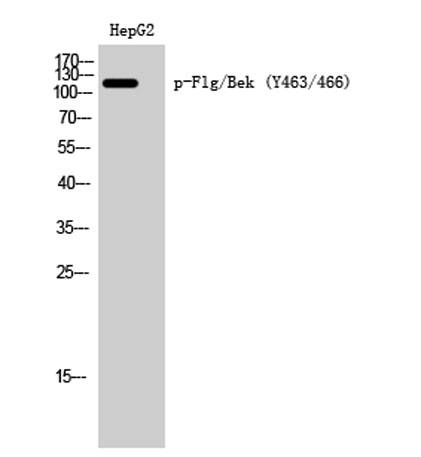
Product name: Flg/Bek (phospho Tyr463/466) rabbit pAb
Reactivity: Human;Mouse;Rat
Alternative Names: FGFR1; BFGFR; CEK; FGFBR; FLG; FLT2; HBGFR; Fibroblast growth factor receptor 1; FGFR-1; Basic fibroblast growth factor receptor 1; BFGFR; bFGF-R-1; Fms-like tyrosine kinase 2; FLT-2; N-sam; Proto-oncogene c-Fgr; CD antigen CD331; FGFR2; BE
Source: Rabbit
Dilutions: Western Blot: 1/500 - 1/2000. ELISA: 1/10000. Not yet tested in other applications.
Immunogen: Synthesized phospho-peptide around the phosphorylation site of human Flg/Bek (phospho Tyr463/466)
Storage: -20°C/1 year
Clonality: Polyclonal
Isotype: IgG
Concentration: 1 mg/ml
Observed Band: 120kD
GeneID: 2260/2263
Human Swiss-Prot No: P11362/P21802
Cellular localization: Cell membrane; Single-pass type I membrane protein. Nucleus. Cytoplasm, cytosol. Cytoplasmic vesicle. After ligand binding, both receptor and ligand are rapidly internalized. Can translocate to the nucleus after internalization, or by translocation from the endoplasmic reticulum or Golgi apparatus to the cytosol, and from there to the nucleus.
Background: The protein encoded by this gene is a member of the fibroblast growth factor receptor (FGFR) family, where amino acid sequence is highly conserved between members and throughout evolution. FGFR family members differ from one another in their ligand affinities and tissue distribution. A full-length representative protein consists of an extracellular region, composed of three immunoglobulin-like domains, a single hydrophobic membrane-spanning segment and a cytoplasmic tyrosine kinase domain. The extracellular portion of the protein interacts with fibroblast growth factors, setting in motion a cascade of downstream signals, ultimately influencing mitogenesis and differentiation. This particular family member binds both acidic and basic fibroblast growth factors and is involved in limb induction. Mutations in this gene have been associated with Pfeiffer syndrome, Jackson-Weiss syndrome,