
$148.00/50µL $248.00/100µL
| 50 µL | $148.00 |
| 100 µL | $248.00 |
| Product name: | FBN1 rabbit pAb |
| Reactivity: | Human;Mouse;Rat |
| Alternative Names: | FBN1; FBN; Fibrillin-1 |
| Source: | Rabbit |
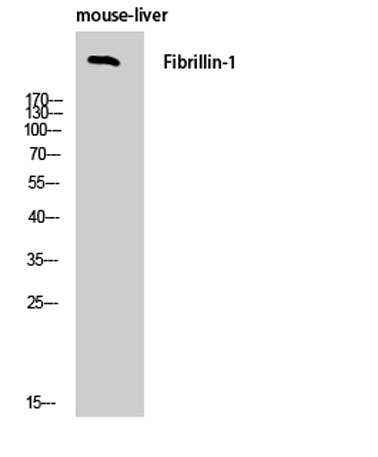
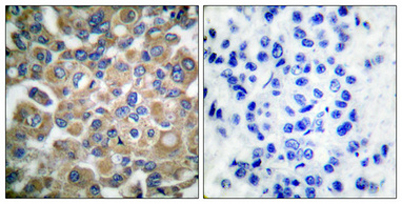
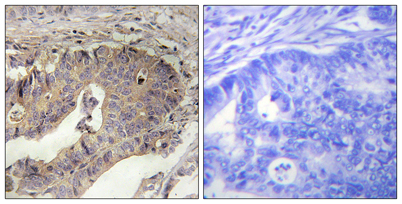
| Dilutions: | Western Blot: 1/500 - 1/2000. Immunohistochemistry: 1/100 - 1/300. ELISA: 1/20000. Not yet tested in other applications. |
| Immunogen: | The antiserum was produced against synthesized peptide derived from human Fibrillin-1. AA range:2811-2860 |
| Storage: | -20°C/1 year |
| Clonality: | Polyclonal |
| Isotype: | IgG |
| Concentration: | 1 mg/ml |
| Molecular Weight: | 312kD |
| GeneID: | 2200 |
| Human Swiss-Prot No: | P35555 |
| Cellular localization: | Secreted . Fibrillin-1 and Asprosin chains are still linked together during the secretion from cells, but are subsequently separated by furin (PubMed:24982166). .; [Fibrillin-1]: Secreted, extracellular space, extracellular matrix .; [Asprosin]: Secreted . Secreted by white adipose tissue and circulates in the plasma. . |
| Background: | This gene encodes a member of the fibrillin family of proteins. The encoded preproprotein is proteolytically processed to generate two proteins including the extracellular matrix component fibrillin-1 and the protein hormone asprosin. Fibrillin-1 is an extracellular matrix glycoprotein that serves as a structural component of calcium-binding microfibrils. These microfibrils provide force-bearing structural support in elastic and nonelastic connective tissue throughout the body. Asprosin, secreted by white adipose tissue, has been shown to regulate glucose homeostasis. Mutations in this gene are associated with Marfan syndrome and the related MASS phenotype, as well as ectopia lentis syndrome, Weill-Marchesani syndrome, Shprintzen-Goldberg syndrome and neonatal progeroid syndrome. [provided by RefSeq, Apr 2016], |


