
$148.00/50µL $248.00/100µL
| 50 µL | $148.00 |
| 100 µL | $248.00 |
| Product name: | EphB4 rabbit pAb |
| Reactivity: | Human;Mouse |
| Alternative Names: | EPHB4; HTK; MYK1; TYRO11; Ephrin type-B receptor 4; Hepatoma transmembrane kinase; Tyrosine-protein kinase TYRO11 |
| Source: | Rabbit |
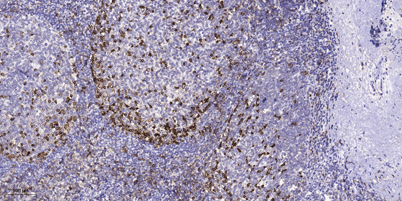
| Dilutions: | Western Blot: 1/500 - 1/2000. Immunohistochemistry: 1/100 - 1/300. Immunofluorescence: 1/200 - 1/1000. ELISA: 1/20000. Not yet tested in other applications. |
| Immunogen: | The antiserum was produced against synthesized peptide derived from human EPHB4. AA range:571-620 |
| Storage: | -20°C/1 year |
| Clonality: | Polyclonal |
| Isotype: | IgG |
| Concentration: | 1 mg/ml |
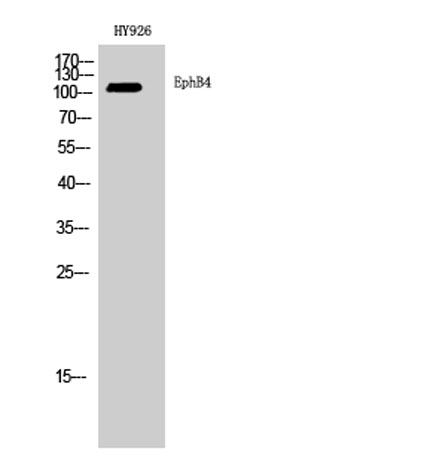
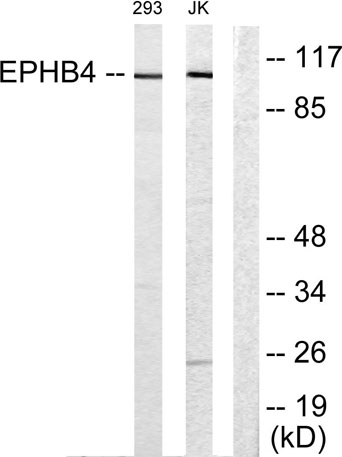
| Observed Band: | 108kD |
| GeneID: | 2050 |
| Human Swiss-Prot No: | P54760 |
| Cellular localization: | Cell membrane ; Single-pass type I membrane protein . |
| Background: | Ephrin receptors and their ligands, the ephrins, mediate numerous developmental processes, particularly in the nervous system. Based on their structures and sequence relationships, ephrins are divided into the ephrin-A (EFNA) class, which are anchored to the membrane by a glycosylphosphatidylinositol linkage, and the ephrin-B (EFNB) class, which are transmembrane proteins. The Eph family of receptors are divided into 2 groups based on the similarity of their extracellular domain sequences and their affinities for binding ephrin-A and ephrin-B ligands. Ephrin receptors make up the largest subgroup of the receptor tyrosine kinase (RTK) family. The protein encoded by this gene binds to ephrin-B2 and plays an essential role in vascular development. [provided by RefSeq, Jul 2008], |


