
$148.00/50µL $248.00/100µL
| 50 µL | $148.00 |
| 100 µL | $248.00 |
| Product name: | COX11 rabbit pAb |
| Reactivity: | Human;Mouse |
| Alternative Names: | COX11; Cytochrome c oxidase assembly protein COX11; mitochondrial |
| Source: | Rabbit |
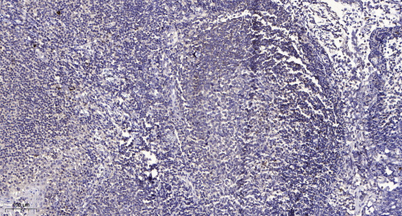
| Dilutions: | Western Blot: 1/500 - 1/2000. Immunohistochemistry: 1/100 - 1/300. Immunofluorescence: 1/200 - 1/1000. ELISA: 1/5000. Not yet tested in other applications. |
| Immunogen: | The antiserum was produced against synthesized peptide derived from human COX11. AA range:51-100 |
| Storage: | -20°C/1 year |
| Clonality: | Polyclonal |
| Isotype: | IgG |
| Concentration: | 1 mg/ml |
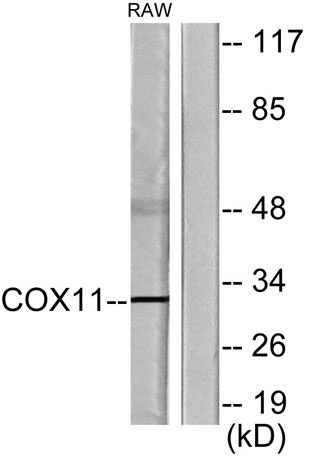
| Observed Band: | 31kD |
| GeneID: | 1353 |
| Human Swiss-Prot No: | Q9Y6N1 |
| Cellular localization: | Mitochondrion inner membrane ; Single-pass membrane protein ; Intermembrane side . |
| Background: | Cytochrome c oxidase (COX), the terminal component of the mitochondrial respiratory chain, catalyzes the electron transfer from reduced cytochrome c to oxygen. This component is a heteromeric complex consisting of 3 catalytic subunits encoded by mitochondrial genes and multiple structural subunits encoded by nuclear genes. The mitochondrially-encoded subunits function in electron transfer, and the nuclear-encoded subunits may function in the regulation and assembly of the complex. This nuclear gene encodes a protein which is not a structural subunit, but may be a heme A biosynthetic enzyme involved in COX formation, according to the yeast mutant studies. However, the studies in Rhodobacter sphaeroides suggest that this gene is not required for heme A biosynthesis, but required for stable formation of the Cu(B) and magnesium centers of COX. This human protein is predicted to c |

