
$148.00/50µL $248.00/100µL
| 50 µL | $148.00 |
| 100 µL | $248.00 |
| Product name: | CST9L rabbit pAb |
| Reactivity: | Human;Rat;Mouse; |
| Alternative Names: | CST9L; Cystatin-9-like |
| Source: | Rabbit |
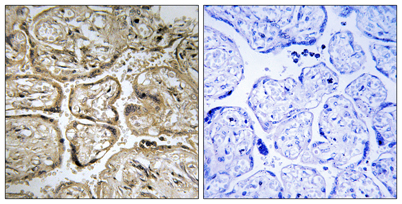
| Dilutions: | Immunohistochemistry: 1/100 - 1/300. ELISA: 1/10000. Not yet tested in other applications. |
| Immunogen: | The antiserum was produced against synthesized peptide derived from human CST9L. AA range:81-130 |
| Storage: | -20°C/1 year |
| Clonality: | Polyclonal |
| Isotype: | IgG |
| Concentration: | 1 mg/ml |
| Molecular Weight: | 17kD |
| GeneID: | 128821 |
| Human Swiss-Prot No: | Q9H4G1 |
| Cellular localization: | Secreted . |
| Background: | The cystatin superfamily encompasses proteins that contain multiple cystatin-like sequences. Some of the members are active cysteine protease inhibitors, while others have lost or perhaps never acquired this inhibitory activity. There are three inhibitory families in the superfamily, including the type 1 cystatins (stefins), type 2 cystatins and the kininogens. The type 2 cystatin proteins are a class of cysteine proteinase inhibitors found in a variety of human fluids and secretions. The cystatin locus on chromosome 20 contains the majority of the type 2 cystatin genes and pseudogenes. This gene is located in the cystatin locus and encodes a protein similar to mouse cystatin 9. Based on its testis-specific expression, it is likely to have a role in tissue reorganization during early testis development. [provided by RefSeq, Jul 2008], |