
$148.00/50µL $248.00/100µL
| 50 µL | $148.00 |
| 100 µL | $248.00 |
| Product name: | ASIC3 rabbit pAb |
| Reactivity: | Human;Rat;Mouse; |
| Alternative Names: | ASIC3; ACCN3; SLNAC1; TNAC1; Acid-sensing ion channel 3; ASIC3; hASIC3; Amiloride-sensitive cation channel 3; Neuronal amiloride-sensitive cation channel 3; Testis sodium channel 1; hTNaC1 |
| Source: | Rabbit |
| Dilutions: | Western Blot: 1/500 - 1/2000. ELISA: 1/20000. Not yet tested in other applications. |
| Immunogen: | The antiserum was produced against synthesized peptide derived from the Internal region of human ASIC3. AA range:191-240 |
| Storage: | -20°C/1 year |
| Clonality: | Polyclonal |
| Isotype: | IgG |
| Concentration: | 1 mg/ml |
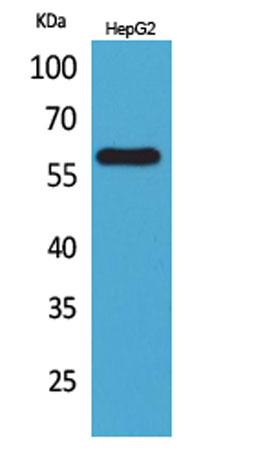
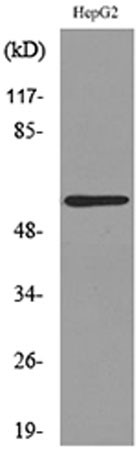
| Observed Band: | 58kD |
| GeneID: | 9311 |
| Human Swiss-Prot No: | Q9UHC3 |
| Cellular localization: | Cell membrane ; Multi-pass membrane protein . Cytoplasm . Cell surface expression may be stabilized by interaction with LIN7B and cytoplasmic retention by interaction with DLG4. In part cytoplasmic in cochlea cells (By similarity). . |
| Background: | This gene encodes a member of the degenerin/epithelial sodium channel (DEG/ENaC) superfamily. The members of this family are amiloride-sensitive sodium channels that contain intracellular N and C termini, two hydrophobic transmembrane regions, and a large extracellular loop, which has many cysteine residues with conserved spacing. The member encoded by this gene is an acid sensor and may play an important role in the detection of lasting pH changes. In addition, a heteromeric association between this member and acid-sensing (proton-gated) ion channel 2 has been observed as proton-gated channels sensitive to gadolinium. Alternatively spliced transcript variants have been described. [provided by RefSeq, Feb 2012], |