
$148.00/50µL $248.00/100µL
| 50 µL | $148.00 |
| 100 µL | $248.00 |
| Product name: | MRTF-A rabbit pAb |
| Reactivity: | Human;Mouse |
| Alternative Names: | MKL1; KIAA1438; MAL; MKL/myocardin-like protein 1; Megakaryoblastic leukemia 1 protein; Megakaryocytic acute leukemia protein; Myocardin-related transcription factor A; MRTF-A |
| Source: | Rabbit |
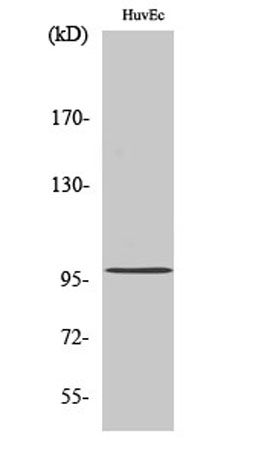
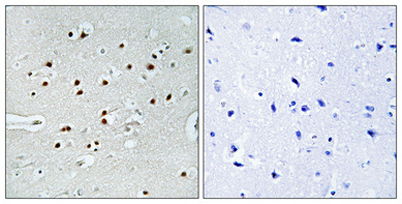
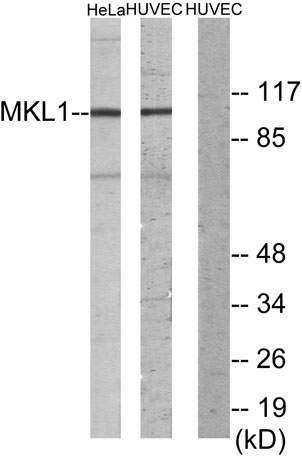
| Dilutions: | Western Blot: 1/500 - 1/2000. Immunohistochemistry: 1/100 - 1/300. ELISA: 1/5000. Not yet tested in other applications. |
| Immunogen: | The antiserum was produced against synthesized peptide derived from human MKL1. AA range:10-59 |
| Storage: | -20°C/1 year |
| Clonality: | Polyclonal |
| Isotype: | IgG |
| Concentration: | 1 mg/ml |
| Observed Band: | 99kD |
| GeneID: | 57591 |
| Human Swiss-Prot No: | Q969V6 |
| Cellular localization: | Cytoplasm . Nucleus . Subcellular location is tightly regulated by actin both in cytoplasm and nucleus: high levels of G-actin in the nucleus observed during serum deprivation lead to low levels of nuclear MRTFA, while reduced levels of nuclear G-actin result in accumulation of MRTFA in the nucleus (By similarity). G-actin-binding in the cytoplasm inhibits nuclear import by masking the nuclear localization signal (NLS) (By similarity). In contrast, binding to nuclear globular actin (G-actin) promotes nuclear export to the cytoplasm (By similarity). Nuclear localization is regulated by MICAL2, which mediates depolymerization of nuclear actin, which decreases nuclear G-actin pool, thereby promoting retention of MRTFA in the nucleus and subsequent formation of an active complex with SRF (PubM |
| Background: | The protein encoded by this gene interacts with the transcription factor myocardin, a key regulator of smooth muscle cell differentiation. The encoded protein is predominantly nuclear and may help transduce signals from the cytoskeleton to the nucleus. This gene is involved in a specific translocation event that creates a fusion of this gene and the RNA-binding motif protein-15 gene. This translocation has been associated with acute megakaryocytic leukemia. Alternative splicing results in multiple transcript variants. [provided by RefSeq, Sep 2013], |


