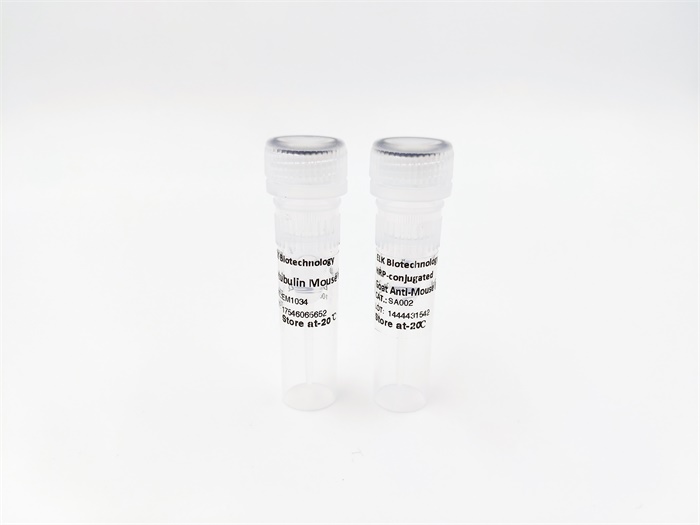

$148.00/50µL $248.00/100µL
| 50 µL | $148.00 |
| 100 µL | $248.00 |
| Product name: | HURP rabbit pAb |
| Reactivity: | Human;Rat;Mouse; |
| Alternative Names: | DLGAP5; DLG7; KIAA0008; Disks large-associated protein 5; DAP-5; Discs large homolog 7; Disks large-associated protein DLG7; Hepatoma up-regulated protein; HURP |
| Source: | Rabbit |
| Dilutions: | Western Blot: 1/500 - 1/2000. ELISA: 1/40000. Not yet tested in other applications. |
| Immunogen: | The antiserum was produced against synthesized peptide derived from human DLGAP5. AA range:791-840 |
| Storage: | -20°C/1 year |
| Clonality: | Polyclonal |
| Isotype: | IgG |
| Concentration: | 1 mg/ml |
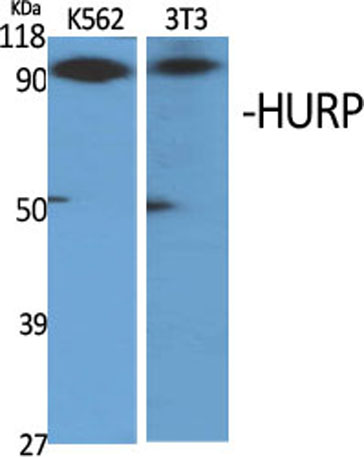
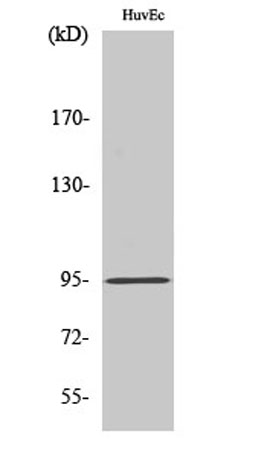
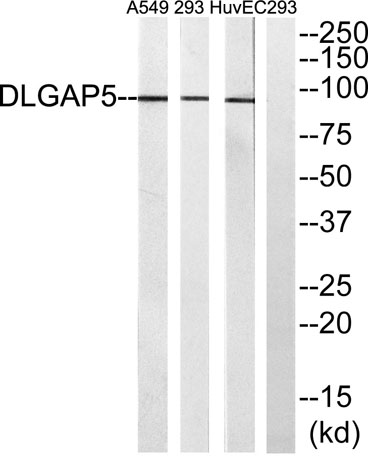
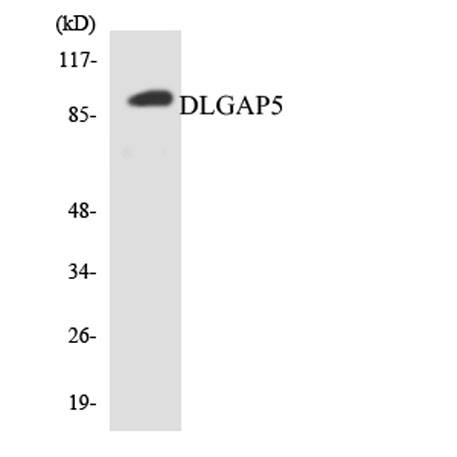
| Observed Band: | 95kD |
| GeneID: | 9787 |
| Human Swiss-Prot No: | Q15398 |
| Cellular localization: | Nucleus. Cytoplasm. Cytoplasm, cytoskeleton, spindle. Localizes to the spindle in mitotic cells. Colocalizes with CDH1 at sites of cell-cell contact in intestinal epithelial cells. |
| Background: | developmental stage:Elevated levels of expression detected in the G2/M phase of synchronized cultures of HeLa cells.,function:Potential cell cycle regulator that may play a role in carcinogenesis of cancer cells. Mitotic phosphoprotein regulated by the ubiquitin-proteasome pathway. Key regulator of adherens junction integrity and differentiation that may be involved in CDH1-mediated adhesion and signaling in epithelial cells.,PTM:Phosphorylated upon DNA damage, probably by ATM or ATR. Decreased phosphorylation levels are associated with the differentiation of intestinal epithelial cells.,PTM:Ubiquitinated, leading to its degradation.,similarity:Belongs to the SAPAP family.,subcellular location:Localizes to the spindle poles in mitotic cells. Colocalizes with CDH1 at sites of cell-cell contact in intestinal epithelial cells.,subunit:Interacts with CDC2. Interacts with the C-terminal proline-rich region of FBXO7. Recruited by FBXO7 to a SCF (SKP1-CUL1-F-box) protein complex in a CDC2/Cyclin B-phosphorylation dependent manner. Interacts with CDH1.,tissue specificity:Abundantly expressed in fetal liver. Expressed at lower levels in bone marrow, testis, colon, and placenta., |


