
$148.00/50µL $248.00/100µL
| 50 µL | $148.00 |
| 100 µL | $248.00 |
| Product name: | CPE rabbit pAb |
| Reactivity: | Human;Mouse;Rat |
| Alternative Names: | CPE; Carboxypeptidase E; CPE; Carboxypeptidase H; CPH; Enkephalin convertase; Prohormone-processing carboxypeptidase |
| Source: | Rabbit |
| Dilutions: | Western Blot: 1/500 - 1/2000. ELISA: 1/10000. Not yet tested in other applications. |
| Immunogen: | The antiserum was produced against synthesized peptide derived from human CPE. AA range:271-320 |
| Storage: | -20°C/1 year |
| Clonality: | Polyclonal |
| Isotype: | IgG |
| Concentration: | 1 mg/ml |
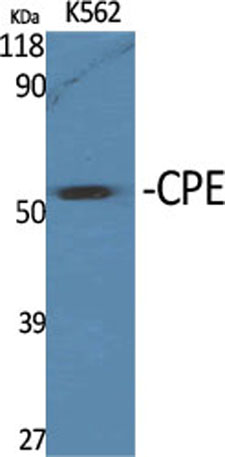
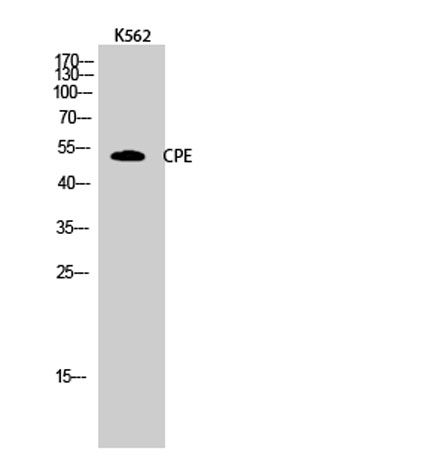
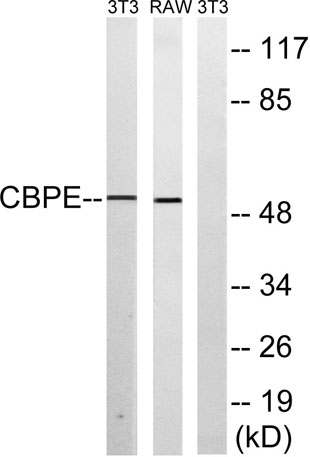
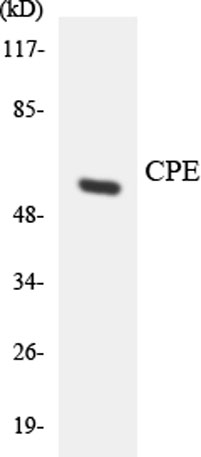
| Observed Band: | 53kD |
| GeneID: | 1363 |
| Human Swiss-Prot No: | P16870 |
| Cellular localization: | [Isoform 1]: Cytoplasmic vesicle, secretory vesicle . Cytoplasmic vesicle, secretory vesicle membrane ; Peripheral membrane protein . Secreted . Associated with the secretory granule membrane through direct binding to lipid rafts in intragranular conditions. . |
| Background: | carboxypeptidase E(CPE) Homo sapiens This gene encodes a member of the M14 family of metallocarboxypeptidases. The encoded preproprotein is proteolytically processed to generate the mature peptidase. This peripheral membrane protein cleaves C-terminal amino acid residues and is involved in the biosynthesis of peptide hormones and neurotransmitters, including insulin. This protein may also function independently of its peptidase activity, as a neurotrophic factor that promotes neuronal survival, and as a sorting receptor that binds to regulated secretory pathway proteins, including prohormones. Mutations in this gene are implicated in type 2 diabetes. [provided by RefSeq, Nov 2015], |


